





What this article helps you consider
- Define the scope of the transfer
- Assess readiness before testing
- Design experiments for the relevant risk
Define the scope of the transfer
Identify the product, method version, analytes, reportable range and intended routine use. Review the development and validation evidence, including known sensitivities and unresolved limitations. Agree which laboratory owns the procedure, who will investigate discrepancies and how the final transfer decision will be approved.
USP describes analytical procedure transfer as a documented qualification of the receiving laboratory’s ability to use the procedure. Different approaches may include comparative testing, co-validation, revalidation or a justified waiver. The selected route must fit the method and the receiving laboratory’s experience. A compendial origin alone should not be treated as proof that every laboratory can apply a method to every matrix without assessment. R15
Assess readiness before testing
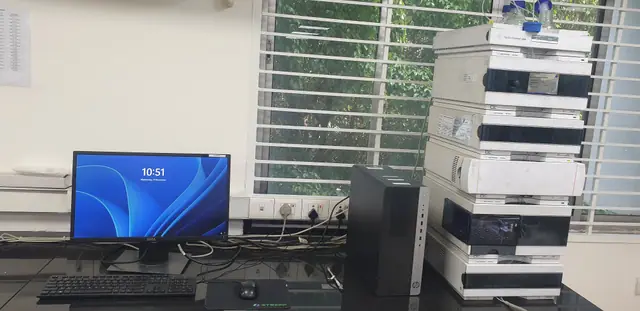
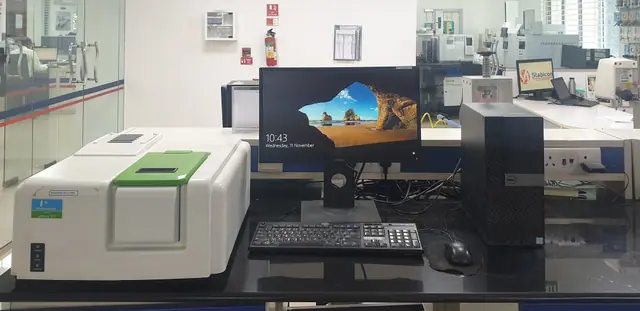
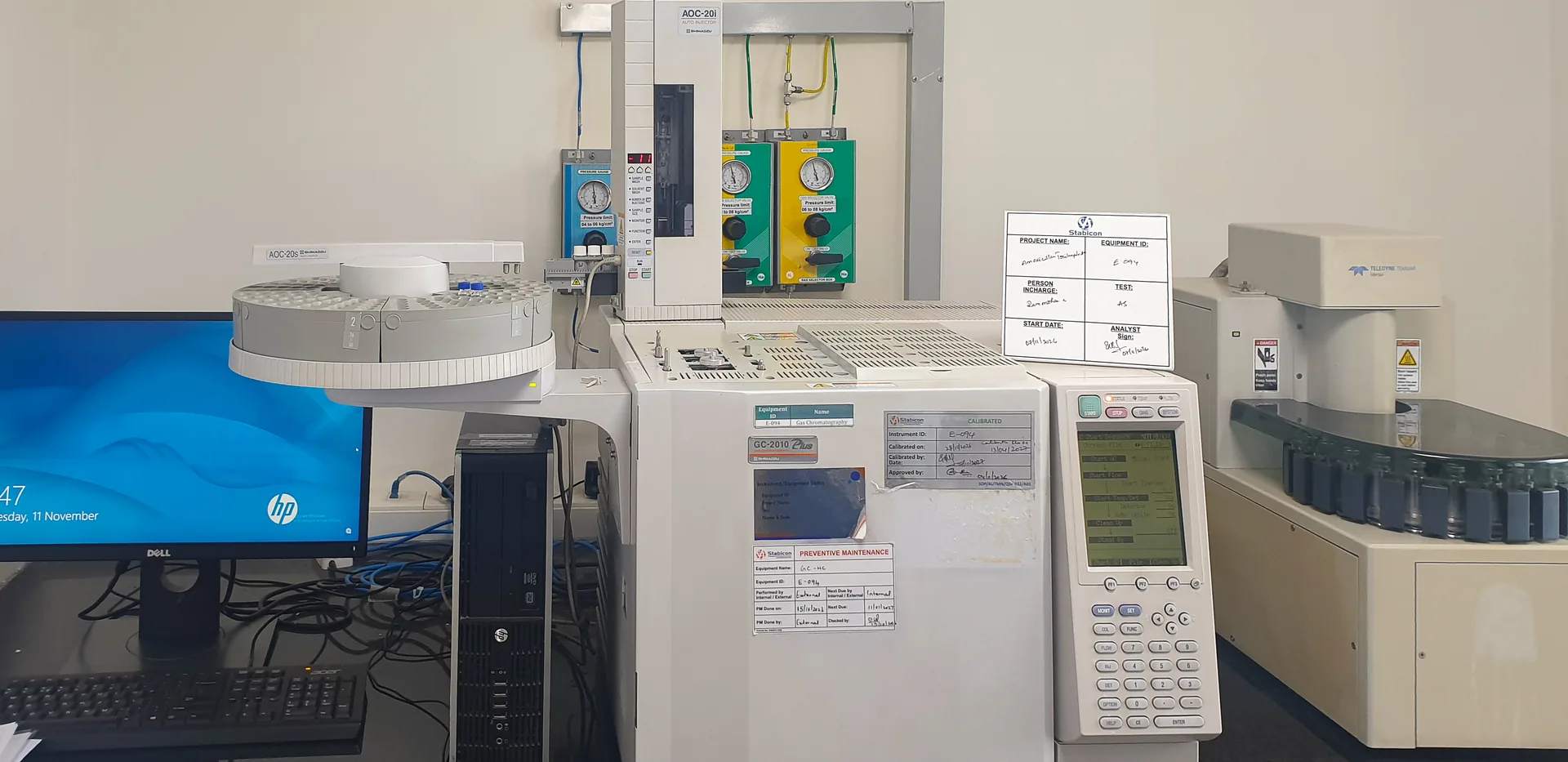
Compare equipment capabilities rather than instrument names. Gradient dwell volume, detector settings, mixing behaviour and software calculations can affect chromatography. Balances, pH meters, extraction equipment and filtration practices can also create differences. Confirm that required reference materials and suitably characterised samples are available.
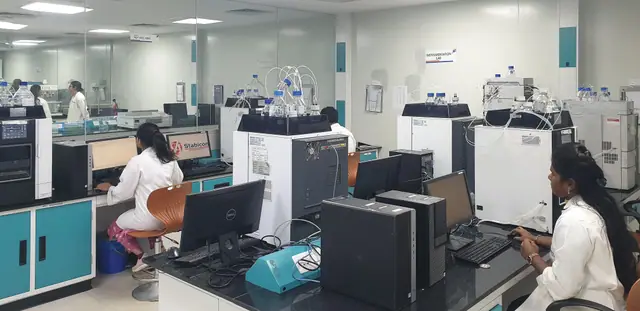
Training should include the details that commonly remain outside a brief procedure. Examples include the visual endpoint of dissolution during extraction, a critical order of addition or the permissible time before analysis. If such details affect the result, incorporate them into controlled documentation rather than depending indefinitely on verbal instruction.
Design experiments for the relevant risk
The protocol should define samples, analysts, days, replicates, instruments and acceptance criteria before testing begins. Select a design capable of assessing the intended transfer question. An assay transfer may need different samples from an impurity procedure operating near its quantitation limit. Where relevant, include aged, stressed or spiked material to challenge specificity and low-level performance.
Do not choose an arbitrary number of injections as a substitute for independent preparations. Repeated injection of one solution examines instrument response more directly than the complete method. If extraction is the main concern, the design must include independent extraction.
Set meaningful acceptance criteria
Criteria should consider validated precision, expected product variability and the consequences of disagreement. A statistical test of whether two means differ can be misleading when sample size is small or the decision requires practical equivalence. Where equivalence or confidence-interval methods are used, establish and justify the acceptable margin in advance.
The illustration illustrates a hypothetical site comparison with a visible bias. It intentionally includes no universal acceptance band. Whether that difference is acceptable depends on the method’s purpose and the protocol. A consistent bias may indicate a reference-standard assignment or calculation issue even when each laboratory’s repeatability is good.
Invented teaching data; not Stabicon experimental results. Transfer acceptance criteria require separate justification.
Investigate discrepancies through hypotheses
If the sites disagree, examine standard potency corrections, moisture basis, dilution factors and sample handling before changing the method. Compare chromatograms and raw data, then use controlled experiments to isolate a proposed cause. A change made during the transfer must be documented and assessed for its validation impact.
For example, one site may obtain lower impurity recovery after using a different membrane filter. A filtration comparison with appropriate controls can test adsorption as a cause. Successful repeat testing after an unexplained change does not establish why the original difference occurred or whether the problem is controlled.
Close the transfer with evidence
The final report should reconcile every acceptance criterion, deviation and method change. Identify the approved procedure version, training status and any follow-up commitments. Routine monitoring should be proportionate to residual risk, particularly where the first production samples differ from those used during transfer.
Stabicon can support transfer planning, comparative experiments and discrepancy investigation so that analytical knowledge remains usable at the receiving site. A clear transfer package reduces the need for repeated interpretation once routine testing begins.
References & further reading
Read the source in its stated scope. Requirements, amendments and compendial editions depend on the product and target market. Draft guidance is identified separately.
- R04ICH Q2 R2 Validation of Analytical Procedures
Final guideline adopted November 2023. Analytical validation framework.
- R05ICH Q14 Analytical Procedure Development
Final guideline adopted November 2023. Development and lifecycle approaches.
- R15USP General Chapter 1224 Transfer of Analytical Procedures
Official USP chapter landing page. Consult the currently applicable USP edition for full text and status.
- R16WHO Guidelines on Technology Transfer in Pharmaceutical Manufacturing
WHO Technical Report Series 1044, Annex 4, 2022.
From insight to a defined programme
Bring your next technical question.
Share your formulation, testing objective or development challenge. Stabicon can review the context and define a suitable scope of work.
Discuss this topic with Stabicon