






What this article helps you consider
- Start with the correct quantity and basis
- Design the premix around distribution
- Measure the unit the user receives
Start with the correct quantity and basis
Vitamin D may be expressed in micrograms or international units. For vitamin D, one microgram corresponds to 40 IU. Thus, 1,000 IU corresponds to 25 micrograms. These figures explain unit conversion and are not a recommended serving or dose. Permitted levels and intended populations must be established separately for the target market. R57R21
The illustration places this quantity in a hypothetical one-gram unit: 25 micrograms per gram is 25 parts per million by mass. The example shows why a small weighing, distribution or calculation error can be important. The ingredient supplied may be a premix with a specified potency rather than pure vitamin D, so its required mass must follow the actual certificate.
For vitamin D, 1 µg = 40 IU. This is a unit conversion, not a recommended serving or dose.
Design the premix around distribution
Direct addition of a very small active quantity to a large blend can create uneven distribution. A suitable carrier or premix increases the practical amount handled, but its particle properties and mixing behaviour still need assessment. Geometric dilution is a useful technique in suitable circumstances, not a guarantee against later segregation.
Compare particle size, density, electrostatic behaviour and the process sequence. A blend that appears uniform immediately after mixing may segregate during transfer, hopper discharge or filling. Sampling should examine the stages and locations relevant to the final unit, with appropriate attention to sampling bias.
Measure the unit the user receives
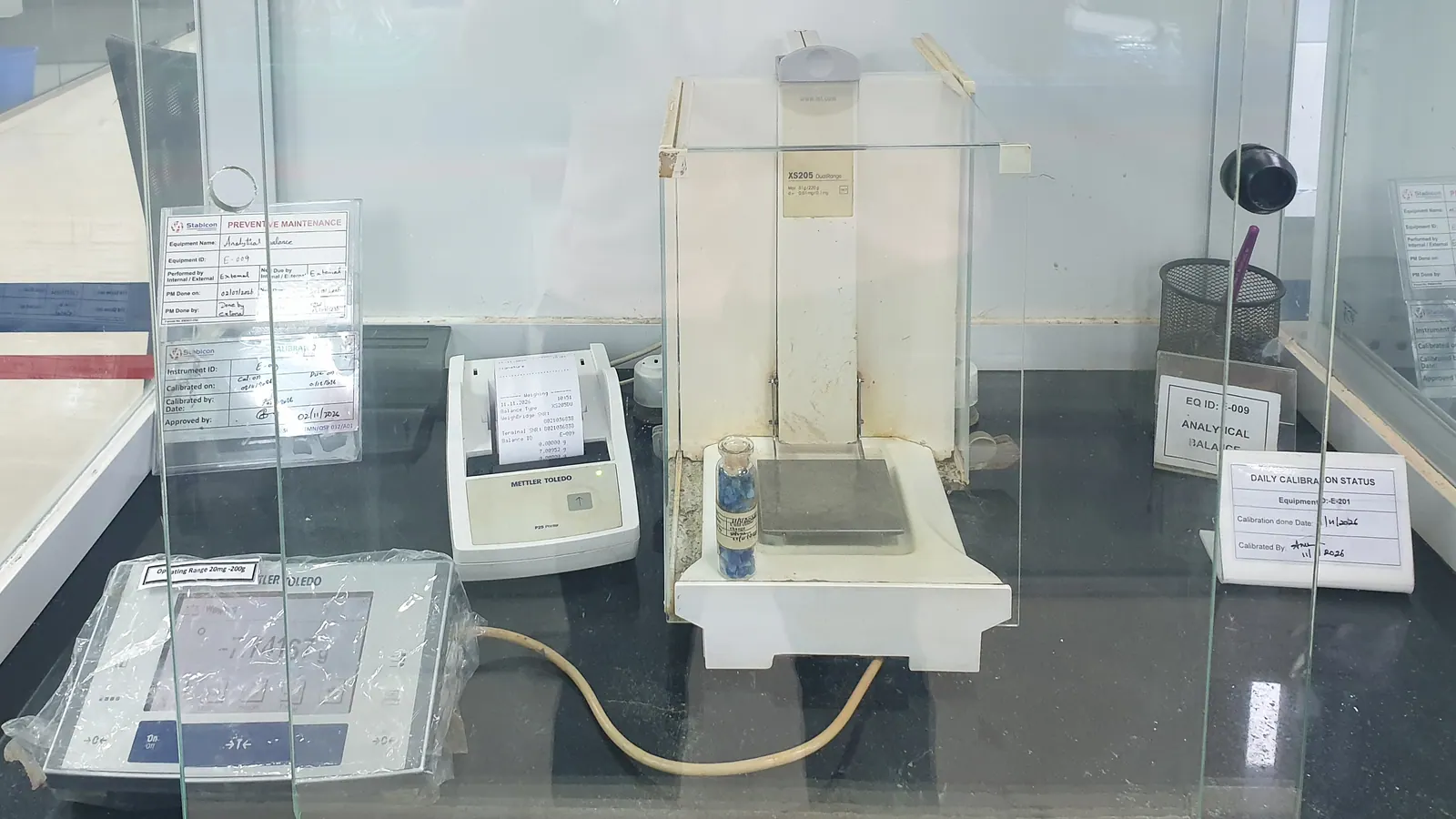
A batch composite assay establishes average content under the sampling plan. It does not by itself demonstrate individual-unit distribution. Decide which uniformity measurements are appropriate to the dosage form, category and intended use, and ensure that the method is sensitive at the relevant low level.
For liquid drops, concentration per millilitre does not establish content per drop. The device, viscosity, temperature, dispensing angle and bottle use can affect delivered volume. Evaluate the supplied system and the proposed instructions rather than assume that a nominal drop volume is constant for every formulation.
Preserve the active through processing
Select the chemical form, carrier and protective approach using compatibility evidence. Light, oxygen, heat and interactions with other ingredients can contribute to degradation under relevant conditions. A protective premix may reduce some exposures but can be damaged by processing or dispersed differently from the main blend.
A hypothetical tablet may meet the mean assay after manufacture while a change in processing increases variability. Investigate both physical distribution and chemical recovery. A low result in a particular unit could have a different cause from a uniform decline across all units during storage.
Develop a method suited to the matrix
Extraction from oil, a compressed tablet or a chewable can require different preparation strategies. Establish recovery and specificity rather than assume that a method for a high-potency raw material works at the finished-product level. Protect preparations from demonstrated sources of instability and define their permitted holding time.
Use the appropriate standard value and unit basis in calculations. Errors between micrograms and milligrams or between premix mass and active content can produce large discrepancies. Validate spreadsheet formulas against independent calculations, including the reporting unit shown on the final certificate.
Confirm stability and packaging together
Track relevant chemical and physical attributes in the intended pack. For multidose liquids, add dispensing and in-use questions where appropriate. A justified overage must comply with applicable safety and regulatory constraints and should not substitute for correcting avoidable instability or poor uniformity.
Stabicon can integrate premix selection, formulation, low-level analysis and stability evaluation so that a vitamin D product is assessed at the quantity and format the user actually receives.
References & further reading
Read the source in its stated scope. Requirements, amendments and compendial editions depend on the product and target market. Draft guidance is identified separately.
- R57NIH Office of Dietary Supplements Vitamin D
Health-professional fact sheet. Includes microgram and IU conversion; no dose advice is inferred here.
- R21FSSAI Health Supplements and Nutraceuticals Standards
Official regulations portal. Verify current amendments, permitted ingredients, levels and category-specific requirements.
- R04ICH Q2 R2 Validation of Analytical Procedures
Final guideline adopted November 2023. Analytical validation framework.
- R50USP General Chapter 11 Reference Standards
Official publisher preview. Intended use and reference-material framework.
From insight to a defined programme
Bring your next technical question.
Share your formulation, testing objective or development challenge. Stabicon can review the context and define a suitable scope of work.
Discuss this topic with Stabicon