






What this article helps you consider
- Characterise the fibre material
- Define what granulation is meant to improve
- Measure hydration as a time dependent process
Characterise the fibre material
Define botanical identity, husk quality, particle distribution, moisture and relevant microbiological and contaminant attributes. Natural-source materials can vary with origin and processing. Supplier qualification should address functional consistency as well as the results on an incoming certificate.
Psyllium’s water interaction and rheology depend on the system and test conditions. Primary research on Plantago ovata husk extracts demonstrates the importance of concentration and physical characterisation. Such experiments support mechanistic understanding but do not establish the performance of a finished granule product without appropriate testing. R60
Define what granulation is meant to improve
Granulation can address dust, flow, portioning, dispersibility or sensory handling. These benefits must be demonstrated for the actual formulation. A coating or binder that reduces dust may also slow wetting, while a rapidly wetting surface can form a hydrated outer layer that traps dry material within a clump.
Establish the intended preparation method and serving size before selecting process conditions. A granule that behaves well under continuous laboratory agitation may be difficult to prepare with the simple stirring described to the user. Assess the relevant conditions rather than optimise only for an attractive beaker demonstration.
Measure hydration as a time dependent process
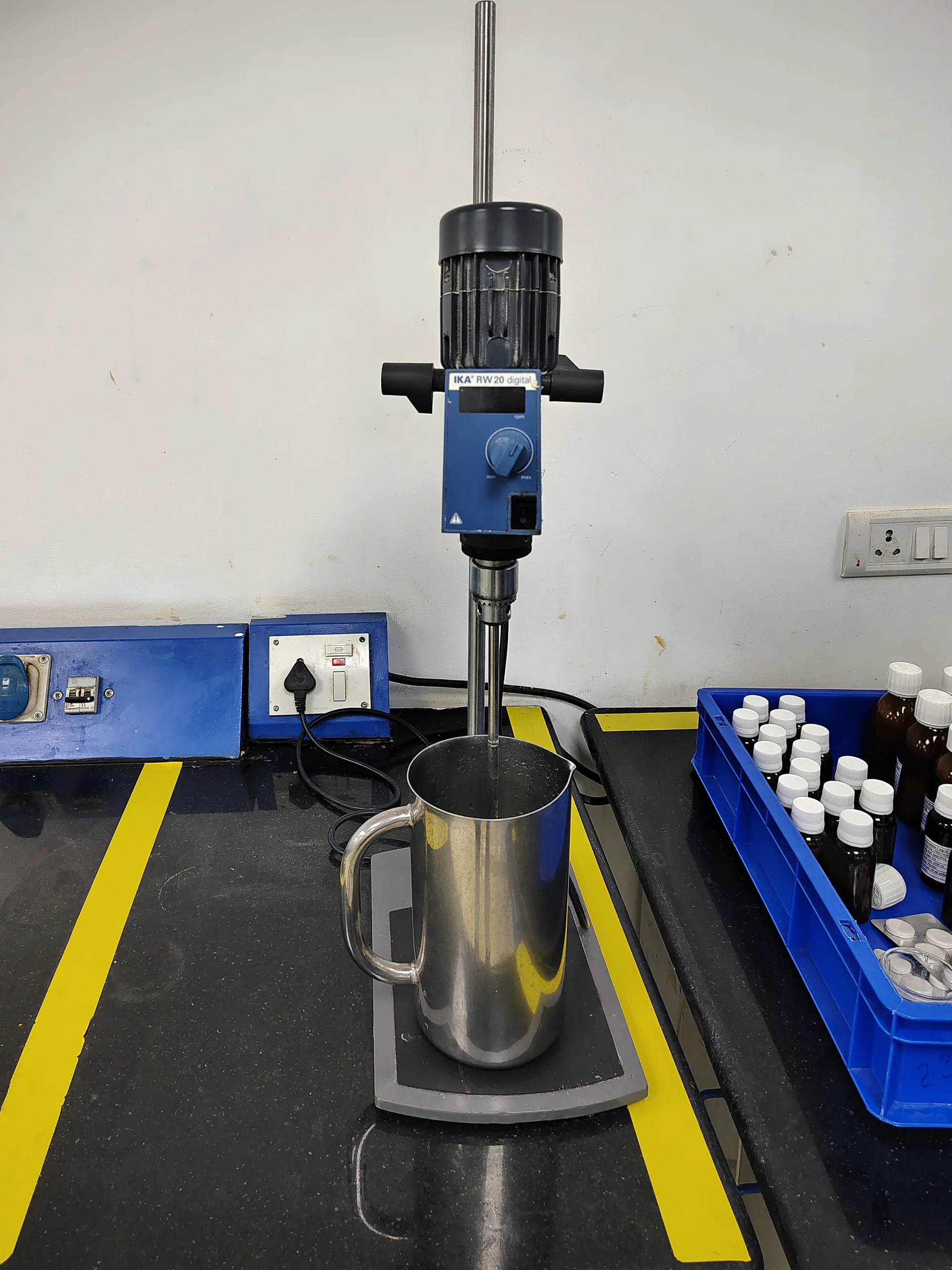
Define liquid volume, temperature, mixing energy, addition order and elapsed time. Distinguish initial wetting, dispersal, swelling and viscosity development. These are related but separate observations. A fast apparent thickening can reflect clumping rather than uniform hydration.
The illustration uses invented curves to illustrate two hydration rates under a single hypothetical method. A faster curve is not automatically superior: the user may need sufficient time to mix and consume the prepared product. Neither curve predicts clinical effect or establishes a preparation instruction.
Invented curves at the same hypothetical fibre concentration. Faster is not automatically better; no clinical effect or preparation instruction is established.
Use rheological results with their conditions
Viscosity depends on concentration, hydration time, temperature and shear conditions. Report these alongside the result. A single number without a method cannot meaningfully compare two psyllium materials. Where useful, evaluate flow behaviour over a range of shear conditions to characterise how the prepared system changes during mixing and handling.
For a hypothetical reformulation, compare the original and new granules at equal fibre content rather than equal total powder weight if carriers differ. Otherwise, an apparent viscosity improvement may simply reflect a different fibre concentration. Include realistic water quality or preparation conditions where they affect the intended use.
Consider uniformity and combined ingredients
A multi-ingredient granule needs control of distribution and segregation. A low-level active can separate from a bulky fibre during handling, while different particle sizes can produce inconsistent portions. Sampling should reflect the packaging process and the intended serving measure.
If a product combines psyllium with another pharmacologically active ingredient, establish the appropriate classification, evidence and controls for that combination. Physical similarity to a benchmark product does not establish equivalent composition, safety or effectiveness. The article’s granule-development principles do not support a generic equivalence claim.
Confirm stability and preparation instructions
Track moisture, flow, clumping, functional hydration and relevant chemical or microbial attributes in the final packaging. Moisture ingress can alter handling before a routine assay changes. Use development evidence and the applicable approved or permitted labelling framework to establish preparation and safety instructions. Authoritative psyllium labels highlight the importance of sufficient liquid and prompt use after mixing; instructions for the actual product must be assessed specifically. R61
Stabicon can connect granule process development, functional testing and stability evaluation to produce a well-characterised product whose laboratory tests reflect realistic preparation.
References & further reading
Read the source in its stated scope. Requirements, amendments and compendial editions depend on the product and target market. Draft guidance is identified separately.
- R60Plantago Ovata Husk Characterisation of Raw Aqueous Extracts
Primary research, 2023. Osmotic, hydrodynamic and rheological characterisation. Finished-product conclusions require separate evidence.
- R61DailyMed Psyllium Husk Powder Product Labelling
Example authoritative product-label record. Its directions and warnings are not a universal label for all psyllium formulations.
- R21FSSAI Health Supplements and Nutraceuticals Standards
Official regulations portal. Verify current amendments, permitted ingredients, levels and category-specific requirements.
From insight to a defined programme
Bring your next technical question.
Share your formulation, testing objective or development challenge. Stabicon can review the context and define a suitable scope of work.
Discuss this topic with Stabicon